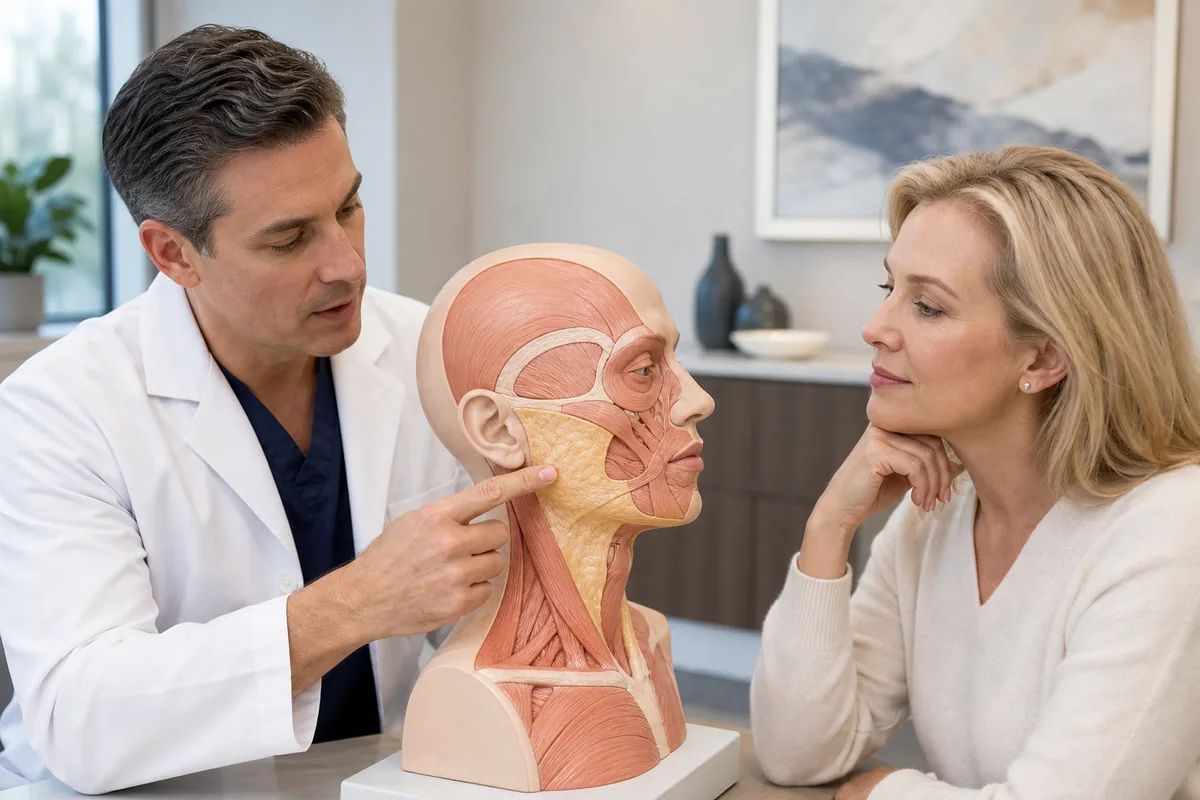
صورة توضيحية · مولّدة بالذكاء الاصطناعي
تجميل الأذن البارزة (رأب الأذن): للأطفال والبالغين
ما هي الأذن البارزة؟
تبلغ الزاوية الطبيعية بين الأذن والجانب الجانبي للرأس نحو 25–35 درجة. حين تزيد هذه الزاوية بشكل ملحوظ — بسبب ضعف في طية الأنتيهيليكس، أو بروز زائد في صدفة الأذن، أو كليهما معاً — تبدو الأذنان ناتئتين إلى الأمام. يُعرف هذا الوضع طبياً ببروز الأذن.
الحالة وظيفية تماماً ولا تؤثر في السمع، غير أنها قد تُسبب توتراً اجتماعياً لدى الأطفال في سن المدرسة وتؤثر على الثقة بالنفس.
من هو المرشح لعملية رأب الأذن؟
يُمكن النظر في إجراء رأب الأذن في الحالات الآتية:
- بروز الأذنين بشكل لافت قياساً بالرأس
- ضعف طية الأنتيهيليكس أو غيابها
- عمق مفرط في صدفة الأذن
- عدم تناسق ملحوظ بين الأذنين
- انزعاج الشخص من الشكل الخارجي
لا يوجد حد أقصى للعمر؛ إذ تُجرى العملية لطيف واسع من الأعمار يبدأ من الأطفال الصغار وصولاً إلى البالغين.
رأب الأذن لدى الأطفال: التوقيت الأمثل
يبلغ غضروف الأذن نحو تسعين بالمئة من حجمه البالغ في سن 5–6 سنوات. لذلك، يُعدّ ما قبل دخول المدرسة أو بدايتها (5–7 سنوات) التوقيت الأنسب على نطاق واسع.
يحمل هذا التوقيت ميزتين: الغضروف لا يزال طيّعاً وأسهل في التشكيل، والطفل يُتمّ تعافيه قبل الاحتكاك المكثف بأقرانه في المدرسة.
تُجرى العملية للأطفال تحت التخدير العام، وتُقيَّم الملاءمة للتخدير بالتنسيق مع فريق التخدير للأطفال.
رأب الأذن لدى البالغين
يخضع البالغون عادةً للعملية تحت تخدير موضعي مع تهدئة خفيفة، في إجراء يومي يعودون بعده إلى المنزل. وعلى الرغم من أن الغضروف يصبح أكثر صلابة مع التقدم في السن، تظل النتائج الممتازة قابلة للتحقيق.
ميزة جراح الأنف والأذن والحنجرة في تشريح الأذن
تلقّى الدكتور حسين أرسلان تدريبه في تخصص الأنف والأذن والحنجرة وجراحة الرأس والرقبة — وهما تخصصان تُدرَس فيهما غضاريف الأذن وأوعيتها الدموية وأعصابها بعمق جراحي. تنعكس هذه الخلفية التشريحية مباشرةً على التخطيط الجراحي وإدارة أي مضاعفات محتملة.
كيف تُجرى العملية؟
يبدأ رأب الأذن بشق صغير في الطية الطبيعية خلف الأذن. يُعيد الجراح تشكيل الغضروف أو إعادة وضعه ليمنح الأذن زاوية طبيعية بالنسبة للرأس. تستغرق العملية عادةً 1–2 ساعة، ويعود المريض إلى المنزل في اليوم ذاته.
مراحل التعافي
- اليومان الأول والثاني: ضمادة واقية حول الرأس تُقلل التورم والانزعاج.
- الأسبوع الأول: مراجعة للغرز؛ يعود معظم المرضى إلى المدرسة أو العمل.
- الأسابيع 3–6: عودة تدريجية إلى الرياضة مع ارتداء عصابة واقية ليلاً.
- 3–6 أشهر: تتضح النتيجة النهائية بشكل كامل.
أسئلة شائعة
هل نتائج رأب الأذن دائمة؟ تدوم النتائج طويلاً حين تُجرى العملية بتقنية سليمة. في حالات نادرة، قد تؤدي مرونة الغضروف إلى تراجع طفيف يمكن معالجته بتصحيح بسيط إذا لزم.
هل ثمة خيارات غير جراحية؟ في مرحلة حديثي الولادة، يمكن أن تكون أجهزة تشكيل الأذن فعّالة خلال الأسابيع الأولى من الحياة. بعد انتهاء هذه الفرصة، تبقى الجراحة الخيار الموثوق الوحيد.
هل ستبقى آثار للجراحة؟ يقع الشق خلف الأذن ويتلاشى بمرور الوقت، ولا يظهر في الظروف الاعتيادية.
هل ترغب في الحصول على استشارة؟
تواصلوا معنا لمزيد من المعلومات أو لحجز موعد بخصوص هذا الموضوع.
تجميل الأذن: التقييم والاستشارةمسؤول النشر:

Op. Dr. Hüseyin Arslan
أخصائي أنف وأذن وحنجرة
يجمع بين اختصاص الأنف والأذن والحنجرة وبين تقييم وظيفة الأنف وتشريح الوجه والتخطيط للجراحة التجميلية.
تقييم أولي شخصي
هل يناسب هذا الإجراء حالتك؟
شارك استفسارك وصورك إن توفرت. يقدّم التقييم الأولي إرشادًا عامًا، أما الخطة النهائية فتتطلب الفحص.