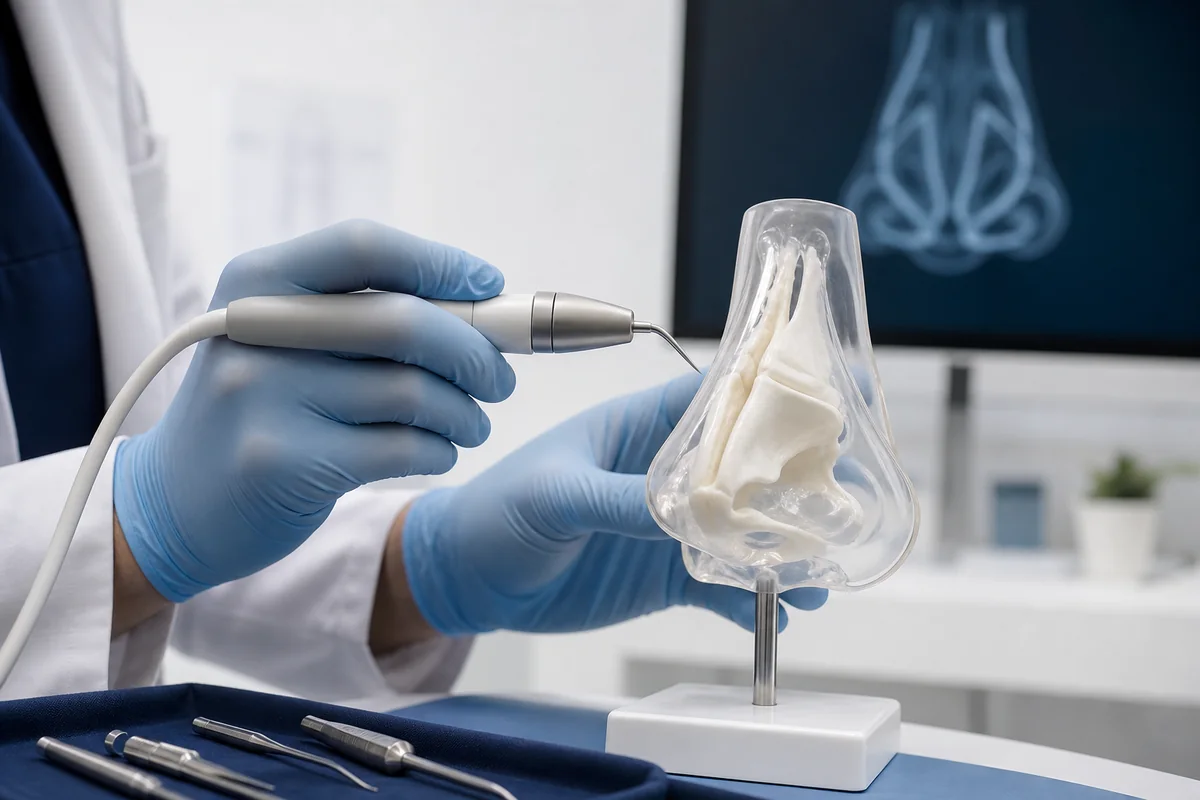
ما هي عملية تجميل الأنف بالموجات فوق الصوتية أو البيزو؟
تستخدم هذه التقنية رؤوسًا كهرضغطية مهتزة في خطوات مختارة لتشكيل عظام الأنف. وهي أداة ضمن عملية تجميل الأنف وليست نوعًا كاملًا مستقلًا، ولا تستبدل تخطيط الغضاريف والأنسجة الرخوة والمجرى الهوائي.
هل البيزو أفضل من تجميل الأنف التقليدي؟
الإجابة المباشرة: البيزو أداة بالموجات فوق الصوتية تُستخدم فقط في خطوات مختارة لقطع عظام الأنف وتشكيلها ضمن العملية. تشير تحليلات التجارب العشوائية إلى متوسط أقل للتورم والكدمات والألم المبكر، لكن جودة الأدلة واختلاف الدراسات لا يسمحان بوعد كل مريض بنتيجة بعيدة المدى أفضل أو تعافٍ أسرع.
ينفذ الجهاز الكهرضغطي قطعاً اهتزازياً في النسيج المتكلّس؛ أما القطع التقليدي فيشكّل عظام الأنف بأداة معدنية ومطرقة. ولا يستبدل هذا الفرق التقني تخطيط الغضاريف والأنسجة الرخوة والمجرى الهوائي وبقية العملية.
كيف تختلف عن الجراحة التقليدية؟
الخاصية
التقليدية
البيزو
الأداة
أزميل + مطرقة
رأس اهتزازي
العمل على العظم
قطع عظمي ميكانيكي
قطع اهتزازي في النسيج المتكلّس
التورم والكدمات المبكرة
مجموعة المقارنة
متوسط أقل في الدراسات
مدة العملية
تعتمد على الحالة والمدخل
تعتمد على الحالة والمدخل
النتيجة بعيدة المدى
تعتمد على الخطة الجراحية كاملة
لم تثبت الأفضلية لكل مريض
تعكس المقارنات اتجاهات عامة؛ تعتمد النتائج على خبرة الجراح والتشريح والخطة الجراحية.
المزايا المحتملة
عمل مضبوط على العظم: قد يساعد الرأس المناسب والرؤية المباشرة في اتباع خط القطع المخطط لدى حالات مختارة. وتعتمد القيمة السريرية على نوع القطع المطلوب وكيفية تنفيذ التقنية.
الدليل القصير المدى وحدوده: تبلغ الدراسات عن مزايا في بعض مقاييس التورم والكدمات والألم وإصابة الغشاء المخاطي المبكرة. جودة الدليل منخفضة، ولا تثبت متوسطات المجموعات تعافياً شخصياً أو تفوقاً جمالياً ووظيفياً بعيد المدى.
أدلة التعافي المبكر: أفاد تحليل تلوي نُشر عام 2024 وجمع 12 تجربة عشوائية بانخفاض متوسط مقاييس التورم والكدمات والألم خلال الأسبوع الأول في مجموعات البيزو. ولا تضمن متوسطات المجموعات تعافي مريض بعينه.
الحدود والتوقعات الواقعية
البيزو أداة وليس ضماناً:
ترتبط النتيجة بالتشريح ونطاق العملية الكامل والتنفيذ والالتئام الفردي؛ ولا تثبت الأداة وحدها النجاح.
تشمل كل عملية أنف العمل على الغضاريف؛ البيزو لمرحلة العظم فقط.
يرتبط خطر المراجعة بالجراحة ككل.
قد لا يناسب الجميع؛ في التدخل العظمي المحدود قد يكون التقليدي أعمل.
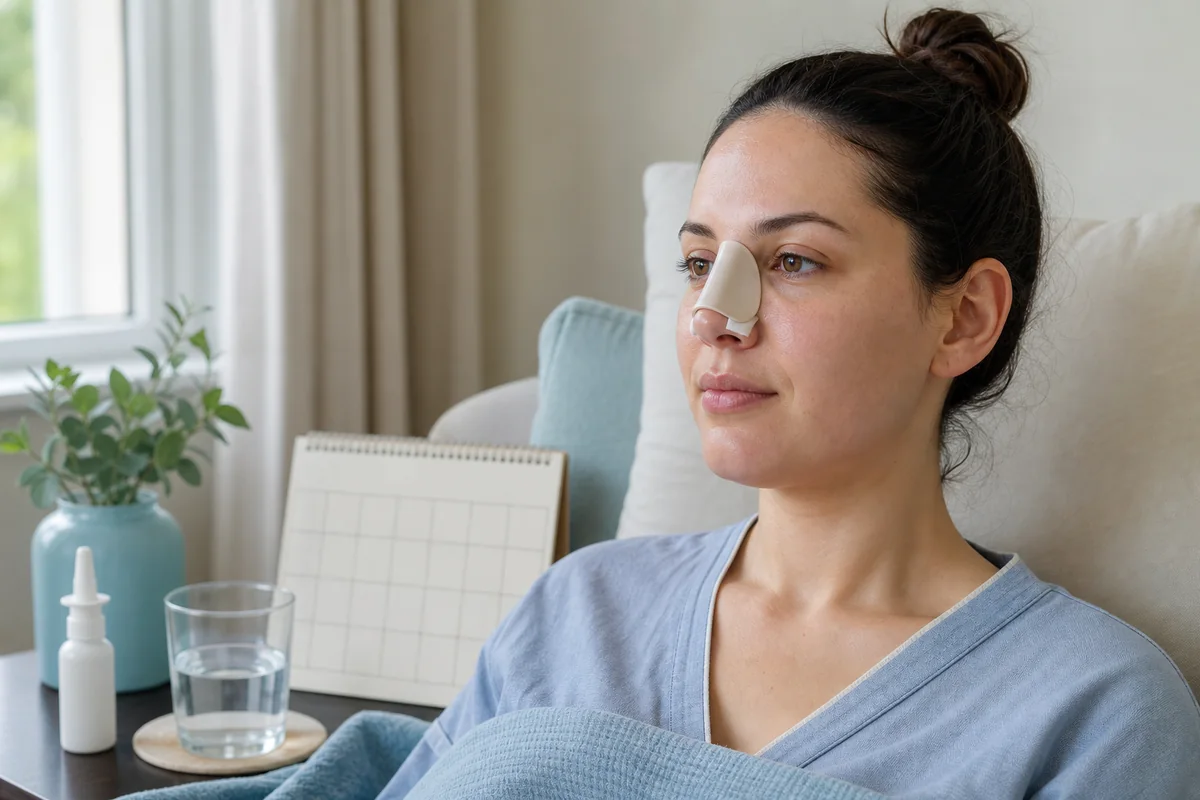
قد يستمر تغير التورم والتفاصيل أشهراً؛ ولا تحدد الأداة وحدها جدول التعافي الشخصي.
من قد يكون مناسباً له؟
حدبة عظمية أو سقف عظمي عريض: عندما يلزم خفض العظم أو إجراء القطع العظمي.
عظام أنف ملتوية أو غير متناظرة: عندما يلزم عمل انتقائي تحت رؤية مباشرة.
حالات مراجعة مختارة: إذا احتاج العظم المتبقي إلى إعادة تشكيل.
حالات لا تحتاج عملاً عظمياً مهماً: قد لا يضيف جهاز البيزو فائدة واضحة.
أهمية الخلفية في طب الأنف والأذن والحنجرة
الأنف ليس عضواً جمالياً فحسب؛ وظيفة التنفس لا تقل أهمية. يُقيّم جراح الأنف والأذن والحنجرة التشريح الداخلي (الحاجز، القرينات، الصمامات) والمظهر الخارجي معاً. ضمن هذا النهج تُراعى الأهداف الوظيفية والجمالية في آنٍ واحد.
أسئلة شائعة
هل هو أقل إيلاماً؟ تشير التحليلات التلوية إلى انخفاض متوسط درجات الألم المبكر، لكن الانزعاج الفردي يختلف حسب الشخص ونطاق الجراحة.
هل تبقى ندوب؟ يتجنب النهج المغلق شق العمود، لكن النسيج الندبي الجراحي يتكوّن داخل الأنف. وفي النهج المفتوح يختلف شكل ندبة العمود بحسب الالتئام الفردي؛ وهذا الاختيار مستقل عن استخدام البيزو.
أفضل من التقليدي؟ الأدق "الأنسب لأي حالة". يمكن مناقشة الطريقتين في حالات مختارة، ولا يضمن أي نهج نتيجة فردية.
يلزم فحص وجهاً لوجه للتقييم؛ تُحدَّد التقنية بعد الفحص.
أسئلة ذات صلة
هل البيزو أفضل من تجميل الأنف التقليدي؟
تشير تحليلات التجارب العشوائية إلى مزايا للبيزو في بعض متوسطات التورم والكدمات والألم المبكر، لكن جودة الأدلة منخفضة ولم يثبت تفوق جمالي أو وظيفي بعيد المدى لكل مريض. يعتمد الاختيار على نوع العمل العظمي المطلوب ونتائج الفحص.
هل تناسب تقنية البيزو الجميع؟
لا. تعتمد فائدتها على نوع تعديل العظام المطلوب وخطة الجرّاح. تشير مراجعات منهجية إلى مزايا في بعض مقاييس التورم والكدمات المبكرة، لكنها لا تضمن نتيجة أفضل أو تعافيًا أسرع لكل مريض.
المصادر الطبية
تدعم هذه المصادر المعلومات الطبية العامة ولا تستبدل التقييم الفردي.