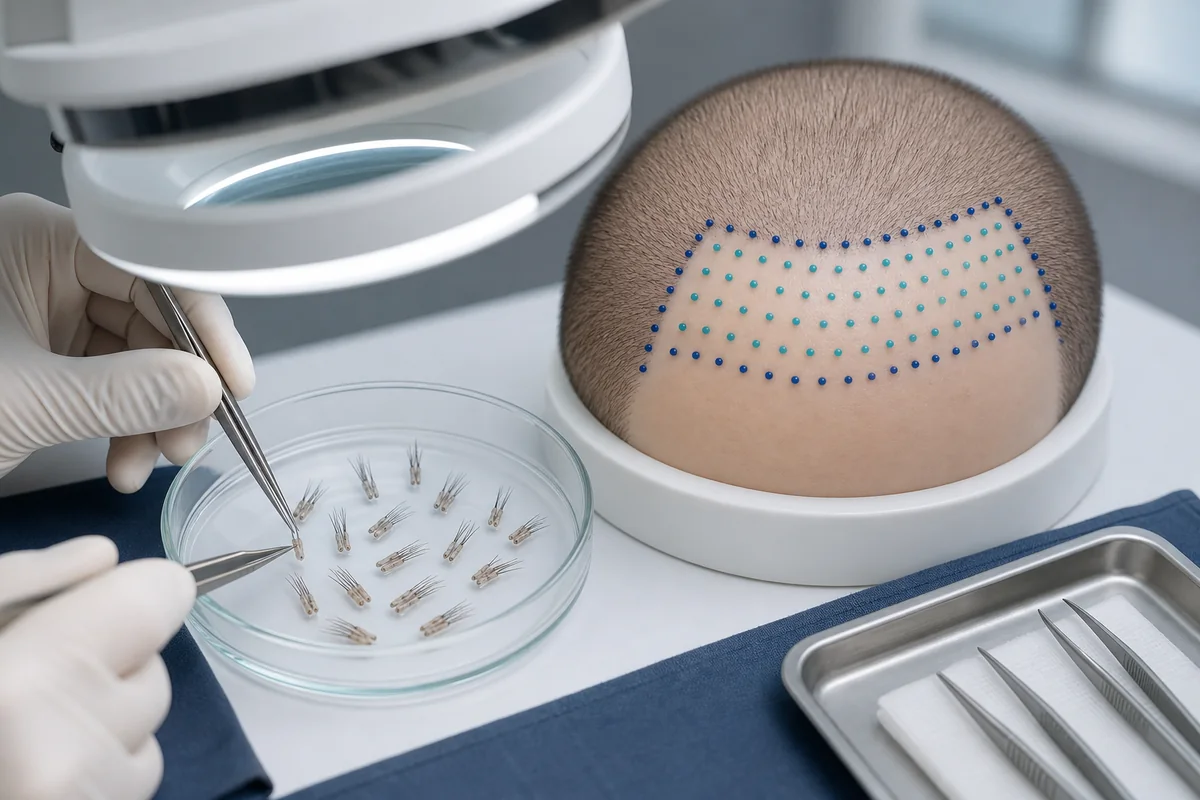
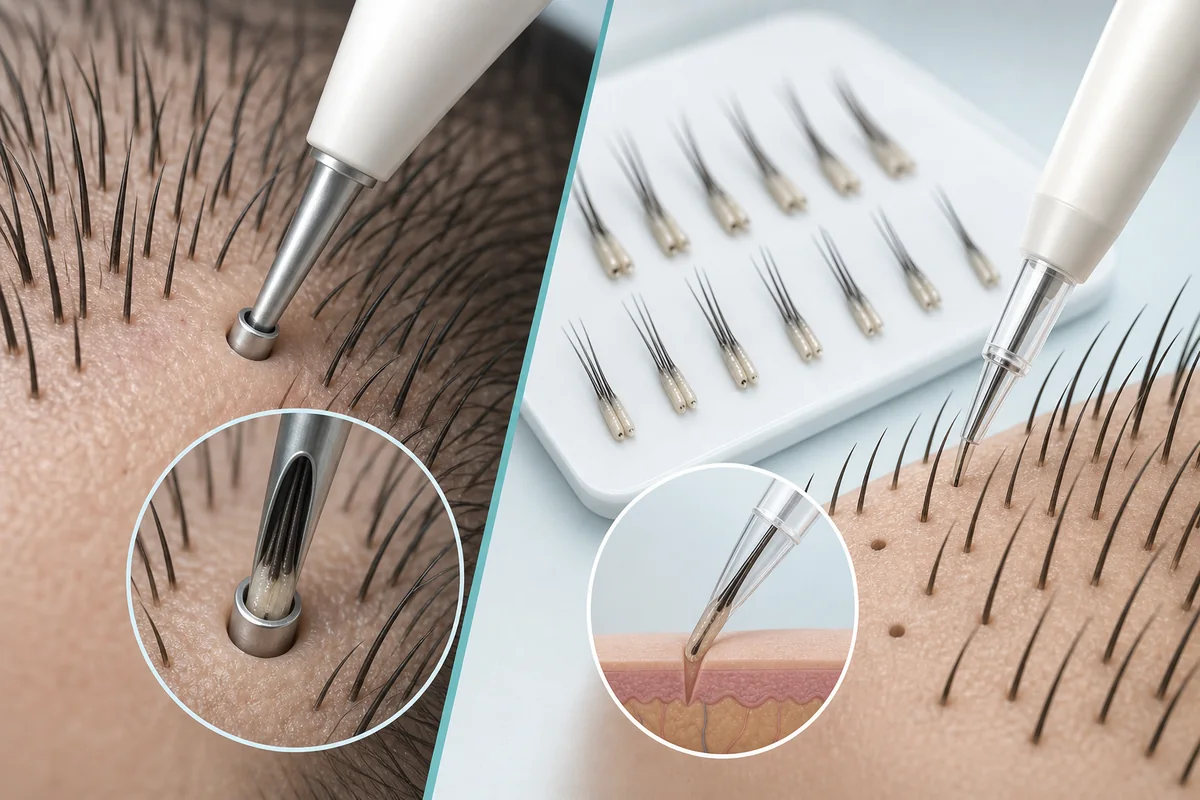
A graft is a follicular unit transferred with a small amount of surrounding tissue; one graft may contain one or several hairs. “Graft count” and “hair count” are therefore not the same measurement.
Graft count and density are two core concepts that directly shape the outcome of a hair transplant. "More grafts is always better" is not true; what matters is planning that fits the recipient area, preserves donor capacity and looks natural. The graft count and density for each person are determined by the physician only after an in-person examination and hair analysis.
What Is a Graft, and What Does the Count Decide?
A graft is a follicular unit containing one or several hairs. The total graft count is planned according to the width of the area to be covered and the targeted density. The same graft count looks sparser when spread over a wide area and denser when applied to a smaller one.
Density (per cm²) and a Natural Look
Density is the number of grafts placed per square centimetre. Natural hair density varies from region to region, so the same density is not applied everywhere. A more careful distribution along the hairline and the areas framing the face creates a natural frame.
The Limit of Donor Capacity
Grafts are taken from donor areas such as the nape and behind the ears, and this region has a limited capacity. For a sustainable result, preserving the donor area also influences how many grafts can be taken in a single session. The aim is balanced planning that considers both present and future needs.
How Many Grafts Are Needed?
There is no single standard number. The loss pattern (Norwood stage), hair thickness, colour–skin contrast and expectations are assessed together. The exact graft count and density are determined individually after examination and hair analysis.
Factor assessed
How it affects graft planning
Size of the recipient area
A larger area spreads the same graft count over more surface
Safe donor capacity
Sets the biological limit on how many grafts can be removed
Hair-shaft calibre
Thicker hairs may create more visual coverage with the same graft count
Hair-to-skin colour contrast
Higher contrast can make lower-density areas more visible
Hairs per follicular unit
Influences the distribution of single- and multi-hair grafts
Future loss pattern
May require preserving donor reserve rather than using it in one session
Related questions
How many hair grafts do I need?
The estimate depends on the size of the area, target visual density, hair calibre, follicular-unit composition and safe donor capacity. Photographs can support a preliminary estimate, but the final plan requires donor and scalp assessment.
Medical sources
These sources support general medical information and do not replace an individual assessment.