According to NHS patient information, people usually take up to 2 weeks off work after nose reshaping; stitches that are not dissolvable and the splint may come off after about a week, bruising and swelling may fade by 3 weeks, strenuous exercise can usually resume at 4 to 6 weeks, and swelling can take up to 6 months to settle completely. These are general ranges: bone and cartilage work, revision or grafts, skin type and follow-up findings change your own timeline.
What Changes the Recovery Timeline?
The extent of work on bone, cartilage, septum, turbinates or nasal valves
Primary versus revision surgery and any graft requirement
Skin and soft-tissue characteristics and the individual swelling response
Nicotine use, medicines, bleeding risk and other health conditions
Protection from trauma and adherence to the written aftercare plan
Another patient's social-media timeline is therefore not a reliable benchmark for individual recovery.
The First Days: Protection and Symptom Monitoring
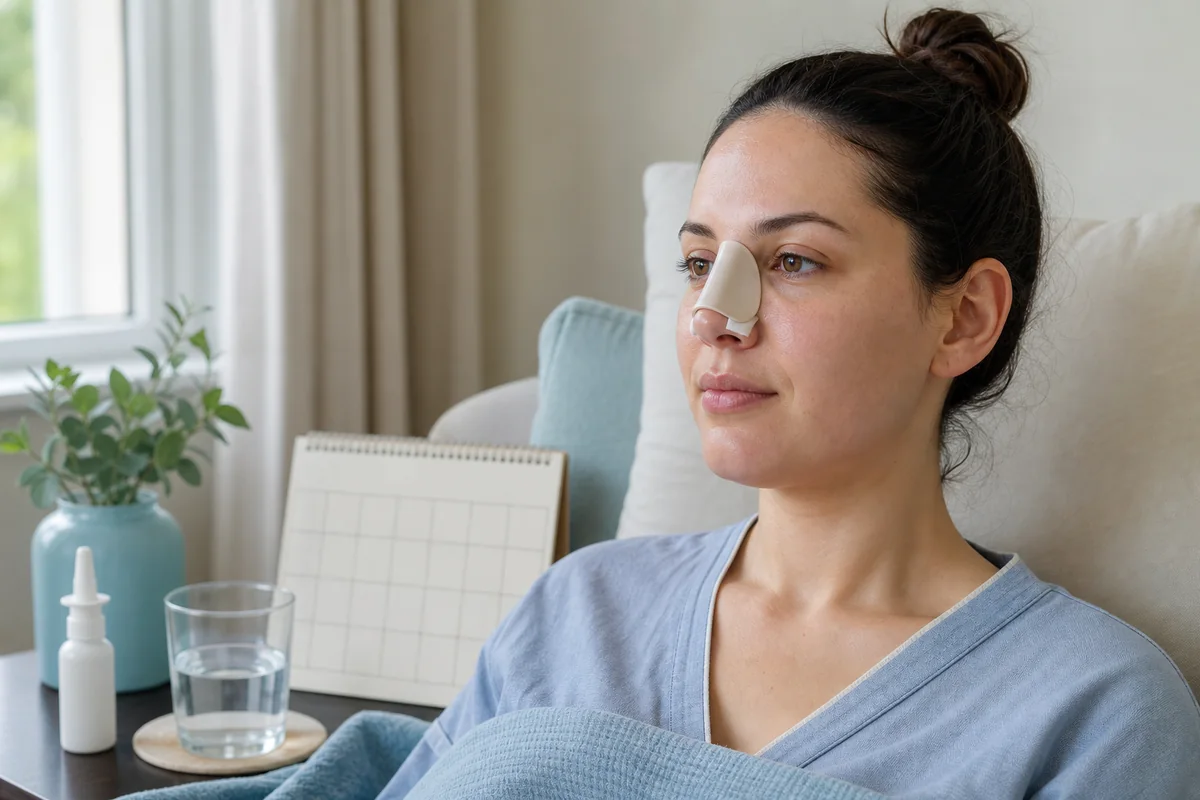
Use of an external splint, tape, internal splints or packing depends on the operation. Temporary nasal blockage, swelling, bruising, numbness and light discharge can occur. Follow the prescribed medication and wound-care plan; ask the surgical team before adding over-the-counter medicines or supplements.
Head elevation, protection from impact and sneezing with the mouth open may be advised. For nose blowing, showering, compresses and nasal cleaning, follow your own written plan rather than a generic online schedule.
The First In-Person Review
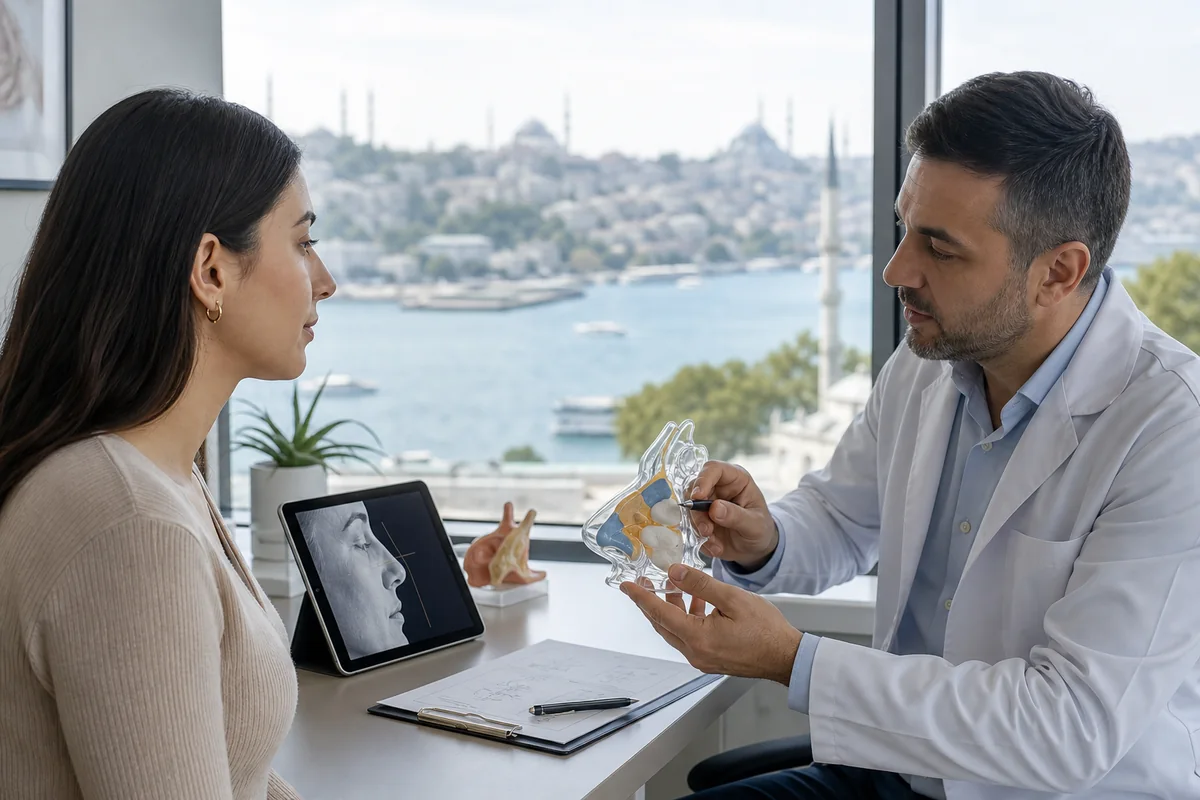
The timing of splint, suture or packing review depends on the material and procedure. Do not remove them yourself. The review assesses the wound, bleeding, swelling, airway and aftercare technique, then updates plans for work, school, glasses, makeup and travel.
Splint removal does not mean healing is complete. Early appearance may be asymmetric or different from expectations because of swelling.
The Following Weeks: A Graded Return
Walking, strenuous exercise, swimming, contact sport, heavy lifting and glasses do not all restart on one date. The surgical team should clear a graded return according to bone and cartilage work, wound status and risk of impact. Sudden exertion or pressure on the nose can affect healing tissues.
Appearance and Breathing Over the Following Months
Swelling does not decrease in a straight line and may vary through the day or be more noticeable in the morning. Fine swelling, especially around the tip, can last longer. A final result cannot be guaranteed for a fixed month. Appearance and nasal breathing should be followed separately; persistent or worsening blockage deserves assessment.
Flying After Rhinoplasty and Staying in Istanbul
There is no single safe flight day. Clearance should consider active bleeding, swelling, internal or external splints, signs of infection or another complication, additional procedures, flight length and access to follow-up at home. An international aftercare plan should state:
The first in-person review and any possible extra review
The clinical criteria used for travel clearance
The urgent contact and facility in Turkey
Photo/video follow-up and in-person care when needed after returning home
Responsibility and treatment arrangements if a complication occurs
When Should You Seek Urgent Help?
Use the emergency warning list provided by your surgical team. Do not wait if there is persistent or increasing bleeding, rapidly worsening swelling, fever with increasing redness or discharge, severe pain not controlled by the prescribed plan, a change in vision, chest pain or shortness of breath. Contact the surgical team and an appropriate emergency service.
This guide is general information; individual aftercare and travel clearance require clinical assessment.
Related questions
When can I fly after rhinoplasty?
There is no single safe flight day. NHS guidance on cosmetic surgery abroad says air travel and major surgery increase the risk of a blood clot, which can be life threatening, and recommends not flying for 7 to 10 days after facial cosmetic procedures; that recommendation does not replace individual clearance. Active bleeding and swelling, splints, additional procedures, signs of a complication, flight length and access to follow-up at home should be reviewed in person before individual travel clearance.
Which symptoms need urgent help after rhinoplasty?
Do not wait for persistent or increasing bleeding, rapidly worsening swelling, fever with increasing redness or discharge, severe pain not controlled by the prescribed plan, a change in vision, chest pain or shortness of breath. Contact the surgical team and an appropriate emergency service.
What should I eat and avoid after rhinoplasty?
The linked NHS and ASPS pages do not define a specific rhinoplasty diet; the main things to avoid are medicines that can increase bleeding and pressure on the nose. ASPS preparation guidance notes that aspirin, anti-inflammatory drugs and herbal supplements can increase bleeding and asks patients to stop smoking; your surgical team decides when any of these may be restarted. NHS information advises not blowing your nose until the splint is removed, avoiding hot baths, and avoiding strenuous exercise and contact sport for 4 to 6 weeks. Eating and drinking resume as the anaesthesia team allows; ask your team before alcohol or any new medicine.
How long are the splint and tapes worn after rhinoplasty?
According to NHS patient information, the external splint held with tape usually comes off after about 7 days, and nose blowing is avoided until then. These sources set no single standard for taping after the splint is removed; whether it is used and for how long follows the surgeon’s aftercare plan. Do not remove splints, packing or sutures yourself.
Medical sources
These sources support general medical information and do not replace an individual assessment.