Buccal fat removal, or bichectomy, removes part of the deep cheek fat pad through an incision inside the mouth. It is not a weight-loss procedure; suitability depends on the whole-face distribution of fat, muscle, bone and skin.
What is buccal fat removal?
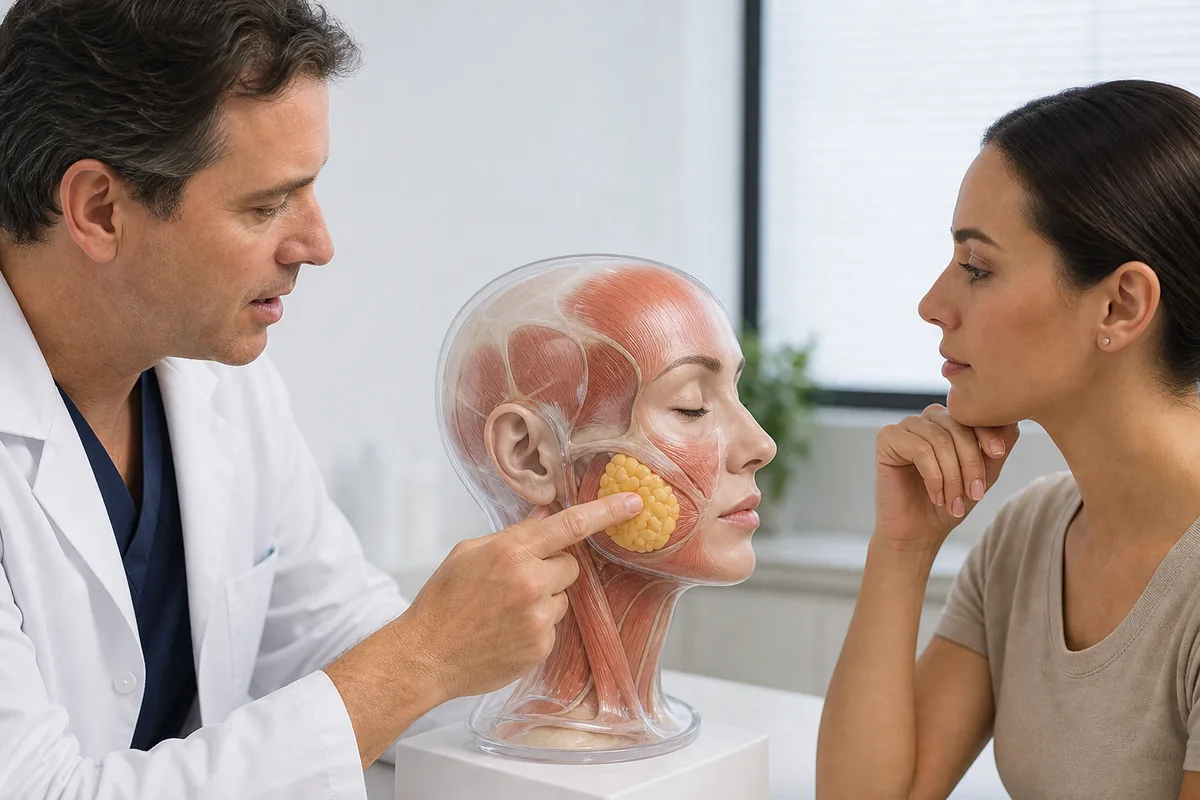
Buccal fat removal, also called bichectomy, removes part of the deep buccal fat pad through an incision inside the mouth. Its purpose is to reduce selected lower-mid-cheek fullness. It is not a weight-loss procedure, does not directly create a jawline and cannot promise a “V-shaped” face or more prominent cheekbones.
How is the cause of cheek fullness assessed?
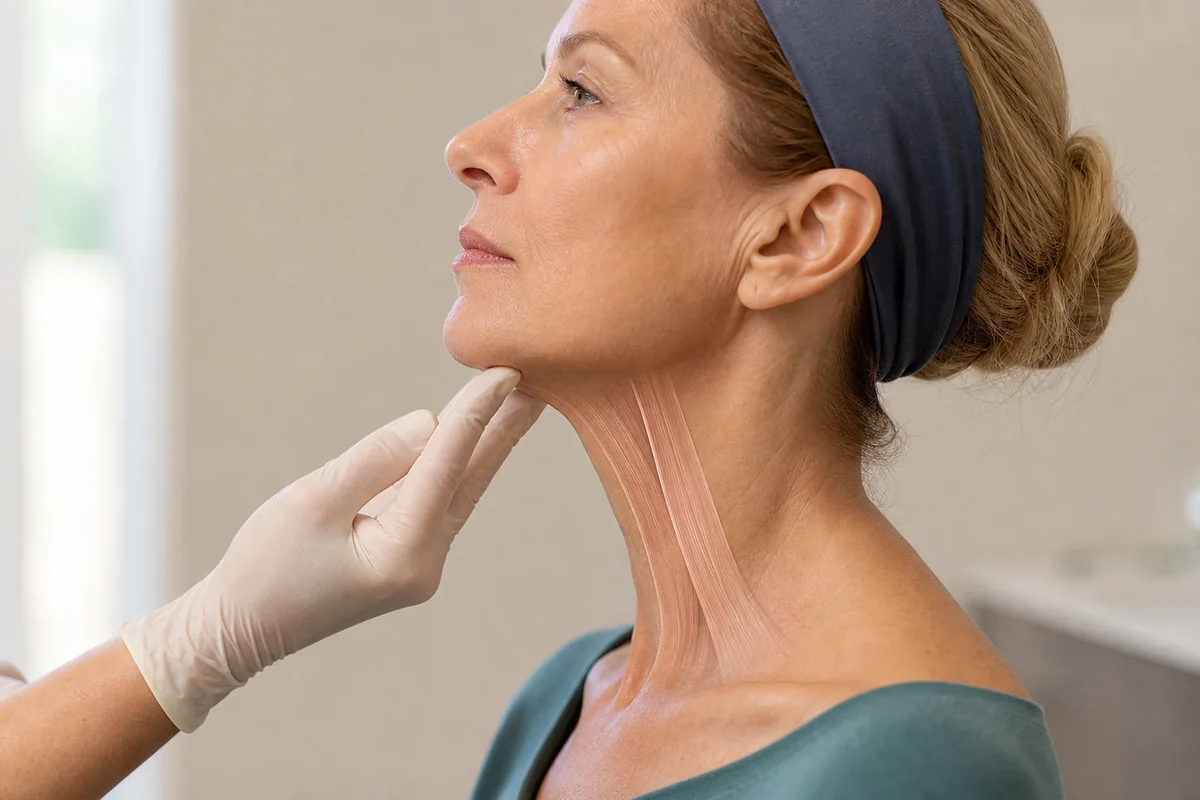
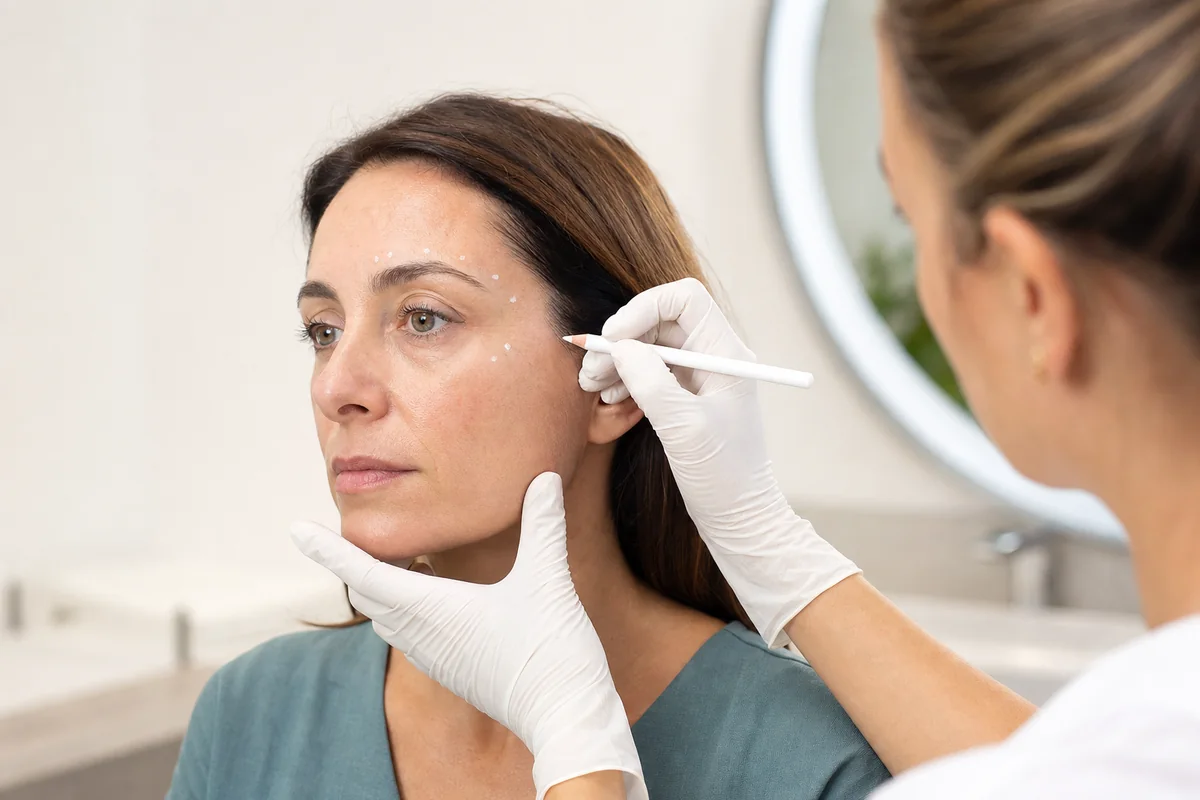
Cheek shape is not determined by the buccal fat pad alone. Subcutaneous fat, the masseter muscle, cheekbone and chin projection, skin thickness, facial asymmetry and future ageing are assessed together. Photographs may support an initial discussion, but the amount—if any—to reduce cannot be decided without facial and intraoral examination.
Finding
Relevance to buccal fat removal
Stable, distinct lower-mid-cheek fullness
May be assessed after other causes are considered
An already narrow or thin face
May be unsuitable because of hollowing or an aged appearance
Weight fluctuation or general facial fullness
Weight stability and whole-face distribution should be reviewed first
Asymmetry, previous facial surgery, nerve or salivary-duct concern
Requires more detailed anatomical and medical assessment
What does the evidence show?
A 2025 meta-analysis found substantial heterogeneity among the available studies and advised caution because of safety concerns and limited predictability. A 2026 systematic review found reports of high short-term satisfaction, but most evidence was low-level and follow-up was too limited to assess long-term ageing effects well. These studies cannot predict one patient’s complication risk or guarantee a long-term aesthetic outcome.
What are the risks?
Swelling, pain, temporary limitation in opening the mouth and asymmetry may occur. Less common but important risks include bleeding, infection, persistent sensory change, injury to a salivary duct or facial-nerve branch, fluid collection, too little or too much change and revision surgery. Although the incision is intraoral, internal healing and scar tissue still occur; “scar-free” or “very comfortable recovery” cannot be guaranteed.
Is it reversible, and what happens with ageing?
Buccal fat is part of deep facial volume, and removed tissue does not simply return to its original state. Facial fat and bone volume continue to change with age, so the possibility of a hollow or prematurely aged appearance should be discussed, especially in a thin face. The operation should not be treated as an easily reversible trial.
Alternatives and questions for the surgeon
If fullness is mainly related to the masseter muscle, chin projection, superficial fat or skin laxity, a different or non-surgical option may be discussed. Ask:
How did you distinguish buccal fat from other causes of fullness?
Why is partial reduction—or no surgery—recommended rather than complete removal?
How are the salivary duct and facial-nerve branches protected?
What is my risk of hollowing as my face ages?
What is the written plan for swelling, diet, oral care, urgent symptoms and follow-up?
Individual suitability and surgical scope require medical history and examination.
Related questions
Is buccal fat removal suitable for everyone?
No. An already thin or narrow face, changing weight, marked asymmetry, impaired healing risk or another cause of fullness may make it unsuitable. Evidence about long-term ageing effects also remains limited.
What are the risks of buccal fat removal?
In addition to swelling, pain, limited mouth opening and asymmetry, risks include infection, bleeding, injury to a salivary duct or facial-nerve branch, persistent sensory change, too much or too little volume reduction and possible revision.
Medical sources
These sources support general medical information and do not replace an individual assessment.