Direct answer
Does every child with middle ear fluid need tubes?
No. Hearing tests, fluid duration and its effect on daily life guide assessment. Monitoring, hearing support or tubes are discussed with the child and family.
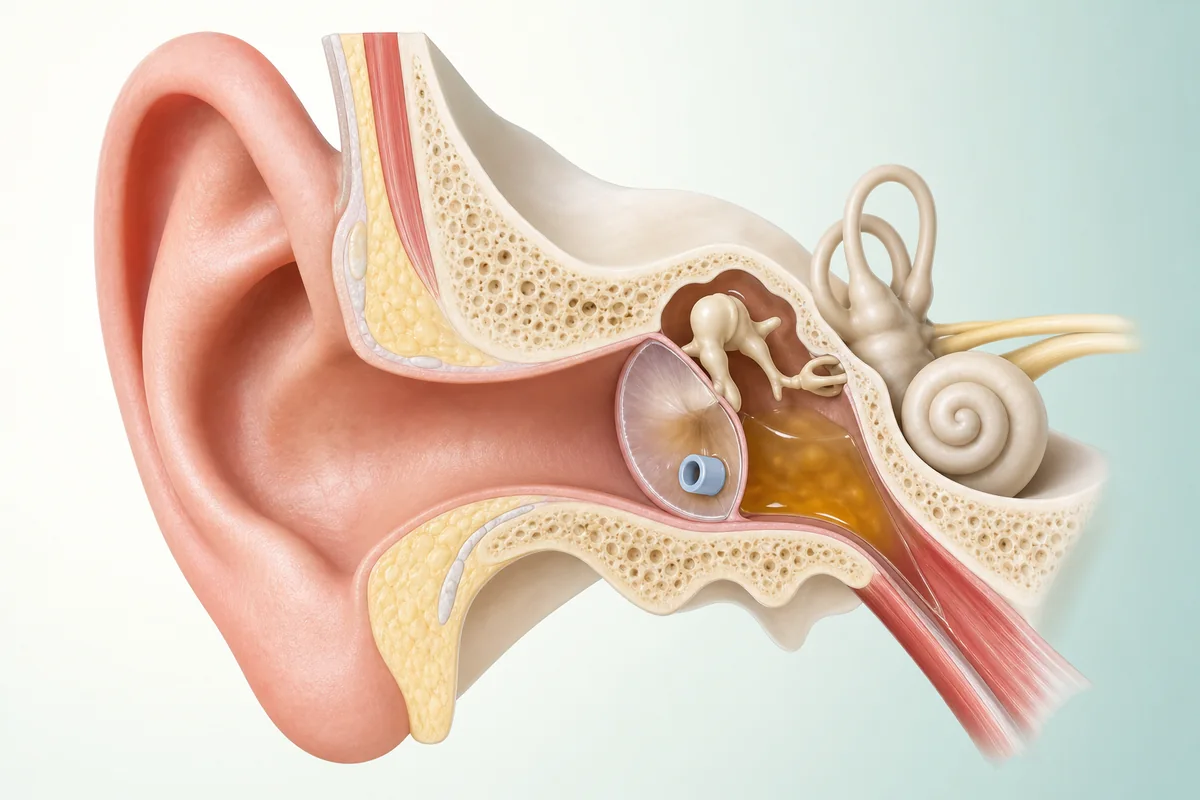
Middle ear fluid (otitis media with effusion, OME) can affect hearing; it is not the same as an acute ear infection. It resolves on its own in some children. Assessment includes an ear examination and age-appropriate hearing testing.
When Are Ear Tubes Considered?
The duration of fluid, its effect on hearing and daily life, and developmental needs are considered together. Monitoring and support, hearing aids or ear tubes in suitable children are discussed with the family. Lack of benefit from medication alone does not establish a need for tubes.
Procedure and Risks
A small tube placed in the eardrum helps ventilate the middle ear. Anaesthesia and the procedure are planned individually; a fixed duration or pain-free recovery cannot be guaranteed. Discharge, infection, eardrum tissue changes and a persistent perforation are possible risks.
Hearing and Follow-up
Postoperative review and hearing testing assess the change in hearing; immediate or complete improvement is not assured for every child. How long a tube stays in place and whether further procedures are needed vary. Follow-up considers the tube and eardrum findings.
Medical sources
These sources support general medical information and do not replace an individual assessment.
Want to Get a Consultation?
Contact us for more information or to schedule an appointment about this topic.
Responsible publisher:

Op. Dr. Hüseyin Arslan
ENT Specialist Surgeon
Combines ENT expertise with nasal function, facial anatomy and aesthetic surgical planning.
Personal preliminary review
How does this apply to your case?
Share your concern and photos if available. A preliminary review provides general guidance; the final plan requires an examination.