Piezo (Ultrasonic) Rhinoplasty in Turkey: Complete Patient Guide 2026
What Is Piezo Rhinoplasty?
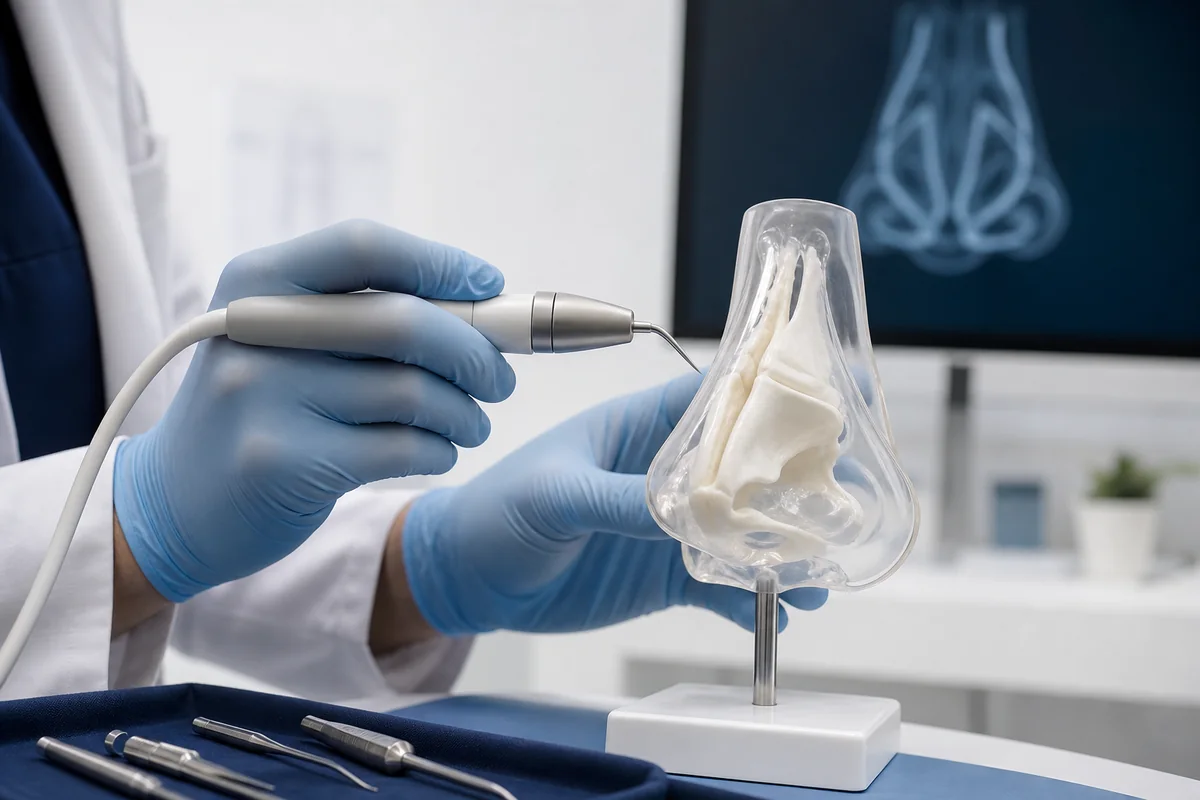
Piezo rhinoplasty uses ultrasonic vibration rather than conventional chisels to cut and shape nasal bones. The "piezo" label refers to the piezoelectric crystal that generates the vibration. This guide explains how the technology works, which patients it may suit, and what to expect during recovery.
How Does the Piezo Technique Work?
The ultrasonic handpiece vibrates at a controlled frequency, selectively cutting bone tissue. The direction and intensity of vibration can be adjusted. The selective bone-tissue interaction is designed to spare surrounding soft tissue — vessels, nerves, periosteum — to a degree that varies with individual anatomy and the surgeon's application.
Piezo vs. Traditional Osteotome: Key Differences
Bone-Shaping Method
Traditional rhinoplasty uses an osteotome (chisel) driven by a mallet to cut and mobilise nasal bones. The piezo system replaces this step with an ultrasonic instrument. Both approaches are capable of effective bone reshaping; the choice depends on the surgeon's training, case anatomy, and surgical goals.
Tissue Selectivity
Piezo instruments aim to transmit less mechanical force to non-bone tissue. In some cases this may reduce post-operative bruising and swelling, but the effect is variable and not consistently pronounced across all patients.
Precision in Complex Anatomy
The ultrasonic instrument allows controlled work in confined spaces and on curved surfaces. This can be advantageous in complex bony anatomies or in revision cases where targeted bone work is needed.
Which Cases May Benefit from Piezo Technique?
Piezo instrumentation may be considered by the surgical team in:
- Significant dorsal hump reduction requiring precise bone removal
- Correction of deviated or asymmetric nasal bones
- Cases where fine contouring of hard bone is the primary goal
- Revision rhinoplasty with limited targeted bone work
- Thin-skinned patients where minimising post-operative contour irregularity is a priority
The piezo system is not applied in every rhinoplasty case and does not alone determine the outcome. Technique selection follows a comprehensive assessment of anatomy, scope, and goals.
Piezo Rhinoplasty Cost in Turkey (2026 Reference)
Centres using piezo instrumentation may charge a premium over standard rhinoplasty due to the specialised equipment cost. Broad market ranges for Istanbul:
- Standard primary rhinoplasty: USD 3,500 – 6,000
- Rhinoplasty with piezo technique (if applicable): USD 4,500 – 7,500, depending on scope
These are reference figures only. Always request a written itemised quote specifying what technique will be used and what is included in the fee.
Recovery After Piezo Rhinoplasty
Recovery is individual. General timeline:
- Week 1–2: Swelling and bruising are expected. Some patients report milder bruising with piezo; this is variable, not universal.
- Weeks 2–4: Most of the swelling subsides; most patients return to social and office activities.
- Months 1–3: Bone and cartilage continue to settle; splint marks and colour changes fade.
- Months 6–18: Final shape consolidates; tip definition is the last feature to fully emerge.
Limitations of the Piezo System
Piezo instruments require specialised training and expensive equipment. Their availability does not replace the surgeon's case experience. Comparative studies report that piezo and conventional techniques can achieve comparable cosmetic and functional outcomes in suitable patients. Technique selection should follow anatomy and goals, not marketing claims.
Piezo Rhinoplasty in Istanbul: ENT-Background Surgeons
Surgeons trained in ENT and Head and Neck Surgery evaluate nasal bone anatomy in the context of airway function — particularly important when aesthetic and functional goals are combined. Dr. Hüseyin Arslan completed ENT and Head and Neck Surgery residency at Ege University and GATA and practises in Şişli, Istanbul. His clinic serves patients in Turkish, English, Russian and Arabic.
Frequently Asked Questions
Is piezo rhinoplasty better than traditional rhinoplasty?
Research does not establish universal superiority for either technique. Piezo instrumentation may offer advantages in specific case profiles; conventional technique achieves excellent results across a wide range of anatomies. Individual assessment determines which approach is appropriate.
Is piezo rhinoplasty more expensive in Turkey?
Some centres charge a premium for piezo due to equipment costs. The difference varies by clinic and scope. When requesting a quote, ask specifically whether piezo will be used and what effect this has on the total fee.
Does piezo technique reduce bruising?
Some patients report less bruising; others experience a standard recovery. Bruising is influenced by many factors — bone density, surgical scope, individual tissue characteristics, and surgical skill — not technique alone.
Does piezo rhinoplasty shorten recovery time?
Individual experiences vary. Some patients report faster resolution of swelling; others follow a standard timeline. Recovery speed is multifactorial and cannot be attributed to instrument choice alone.
Can piezo technique be used in revision rhinoplasty?
Yes, particularly in revisions requiring limited targeted bone work where minimising impact on surrounding tissue is a priority. Suitability is assessed by the surgical team case by case.
Can all rhinoplasty surgeons use the piezo system?
No. Piezo instrumentation requires specific training and expensive equipment. Many experienced surgeons achieve equivalent results with conventional instruments.
Does piezo work on cartilage as well as bone?
Piezo systems are designed primarily for bone work. Cartilage reshaping and grafting continue to be performed with conventional instruments.
How much does rhinoplasty cost in Turkey in 2026?
Primary rhinoplasty in Istanbul ranges from approximately USD 3,500 to USD 7,500 depending on scope, technique, and facility. Piezo-specific pricing varies. Always compare written itemised quotes.
How long should I stay in Istanbul after piezo rhinoplasty?
Most international patients stay 7–10 days post-surgery, covering the first check-up, splint removal, and fit-to-fly clearance.
What should a pre-operative assessment include?
A thorough evaluation covers internal anatomy (septum, turbinates, airway), external structure (bone distribution, cartilage condition, skin thickness), general health, and realistic goal-setting. Technique selection follows this assessment.
How do I book a consultation with Dr. Hüseyin Arslan?
Contact the clinic via the website or WhatsApp. An initial remote consultation by video call is available before booking travel.
*This content is educational. Treatment decisions are made after individual clinical assessment.*
Want to Get a Consultation?
Contact us for more information or to schedule an appointment about this topic.
Rhinoplasty in Turkey: procedure and consultation
Op. Dr. Hüseyin Arslan
ENT Specialist & Head and Neck Surgeon
Combines ENT and head-and-neck surgery expertise with nasal function, facial anatomy and aesthetic surgical planning.
Personal preliminary review
How does this apply to your case?
Share your concern and photos if available. A preliminary review provides general guidance; the final plan requires an examination.