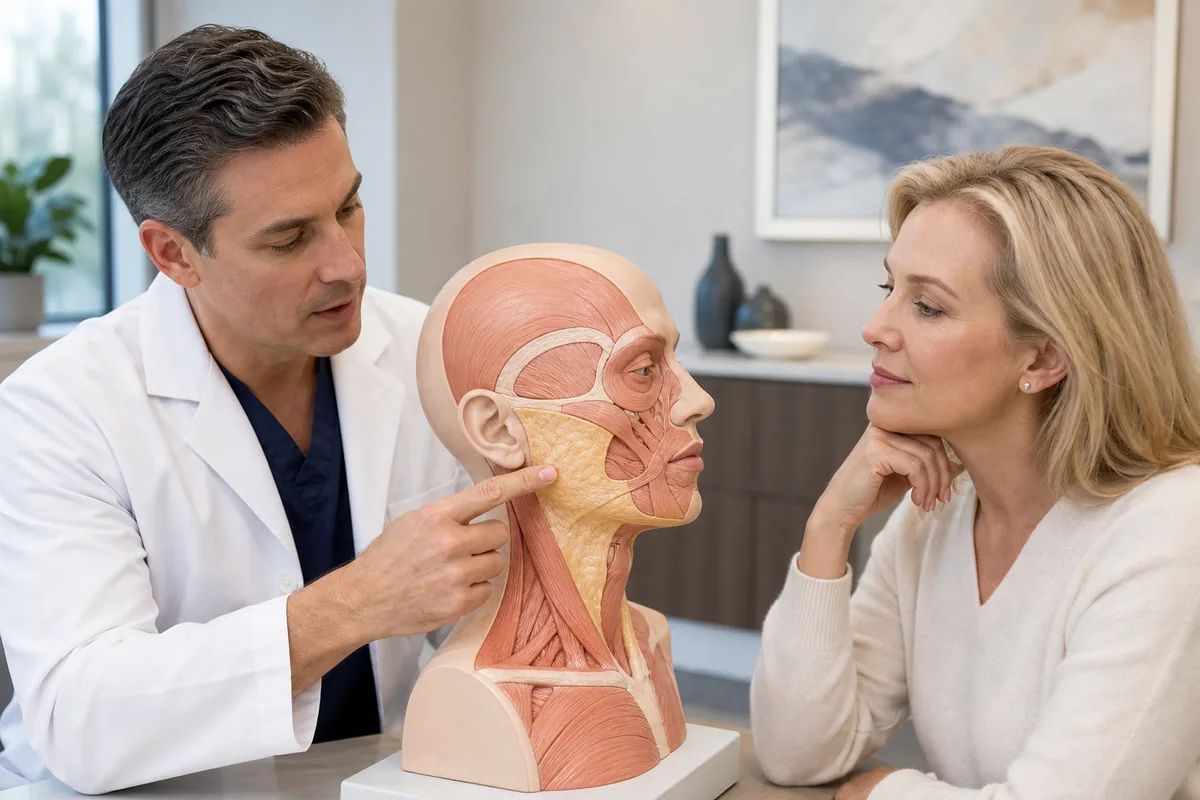
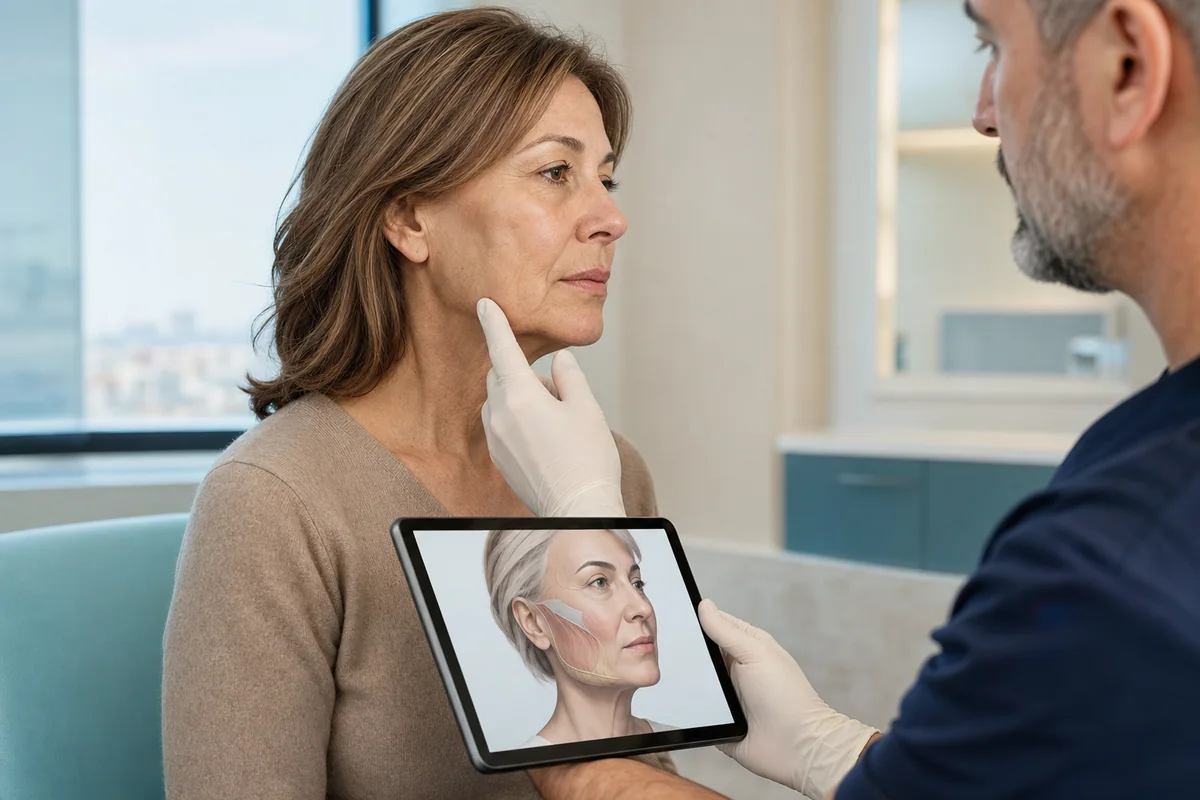
Does a deep plane facelift last longer?
Current evidence does not prove that deep plane surgery lasts longer for every patient. Longevity also depends on anatomy, ageing pattern, the extent and execution of surgery, healing and lifestyle.
Direct answer
The distinction is not only a marketing label: it concerns the dissection plane, management of retaining ligaments and the vector of tissue repositioning. SMAS techniques also vary. Comparative reviews indicate that both approaches can help selected patients and do not establish one technique as superior for everyone.
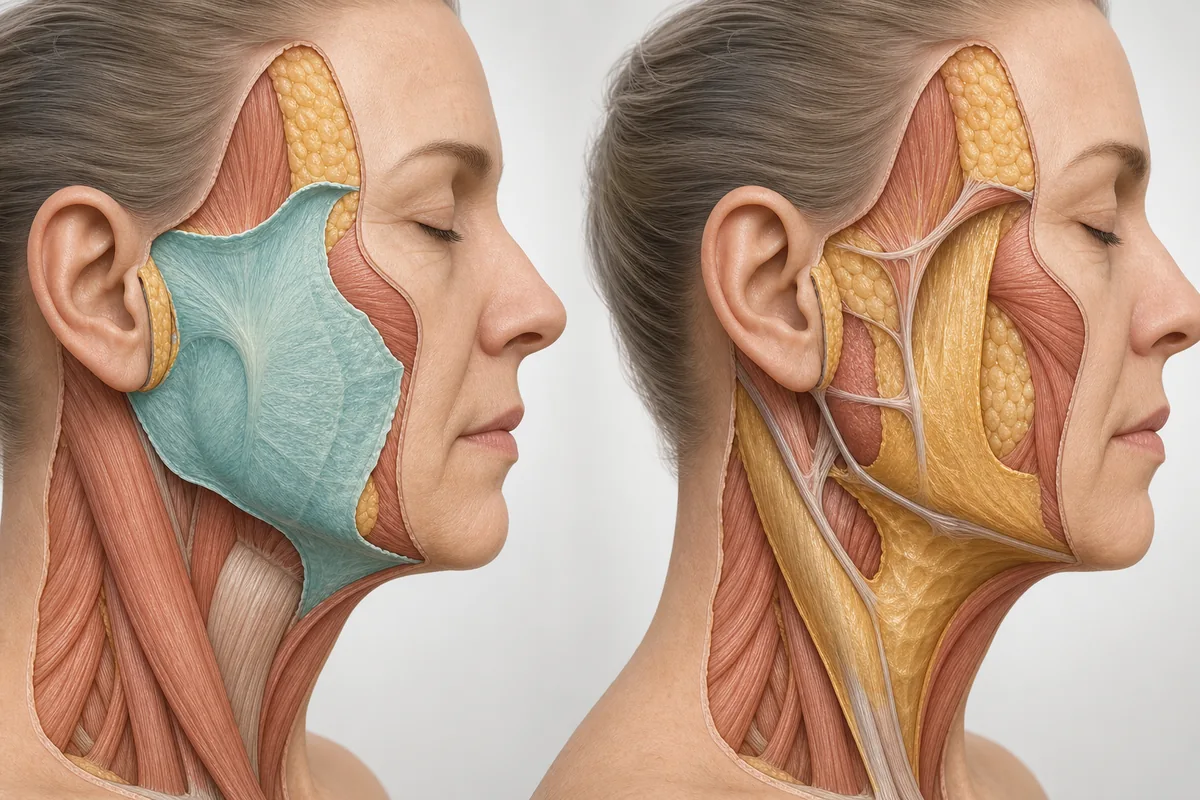
The SMAS (superficial musculo-aponeurotic system) is one of the supporting layers considered in facelift planning. Classic SMAS and deep plane are not single standard operations but families of techniques with different variations. Key distinctions include the dissection plane, management of retaining ligaments and how tissues are repositioned. A suitable approach can only be selected after facial and neck anatomy, medical history and goals are assessed together.
In this approach the skin and SMAS are handled as separate layers; the SMAS is tightened or folded (plication/imbrication). It is a common, reliable method and gives effective results in suitable cases.
In a deep plane technique, selected retaining ligaments may be released in a deeper plane and the skin-SMAS moved together. The extent of dissection and the face-neck vectors vary by patient and operative method.
Recent systematic reviews report that both approaches can benefit selected patients, while direct comparative evidence remains limited and heterogeneous. The evidence does not support a universal claim that deep plane is more natural or durable, or that SMAS is safer. Skin, midface, jawline, neck, previous surgery, general health and the surgeon’s experience all matter.
Both approaches require discussion of haematoma, infection, scarring, asymmetry, skin-healing problems and temporary or, rarely, permanent nerve injury. The technique is selected after examination and shared decision-making.
The technique name alone cannot determine a return-to-work date. Wound and any drain care, reviews, medicines and return to exercise need individual planning. Clarify whom to contact about unexpected symptoms before surgery.
Current evidence does not prove that deep plane surgery lasts longer for every patient. Longevity also depends on anatomy, ageing pattern, the extent and execution of surgery, healing and lifestyle.
These sources support general medical information and do not replace an individual assessment.
Contact us for more information or to schedule an appointment about this topic.
Facelift in Istanbul: assessment, technique and recoveryResponsible publisher:

ENT Specialist Surgeon
Combines ENT expertise with nasal function, facial anatomy and aesthetic surgical planning.
Personal preliminary review
Share your concern and photos if available. A preliminary review provides general guidance; the final plan requires an examination.