What Is the SMAS?
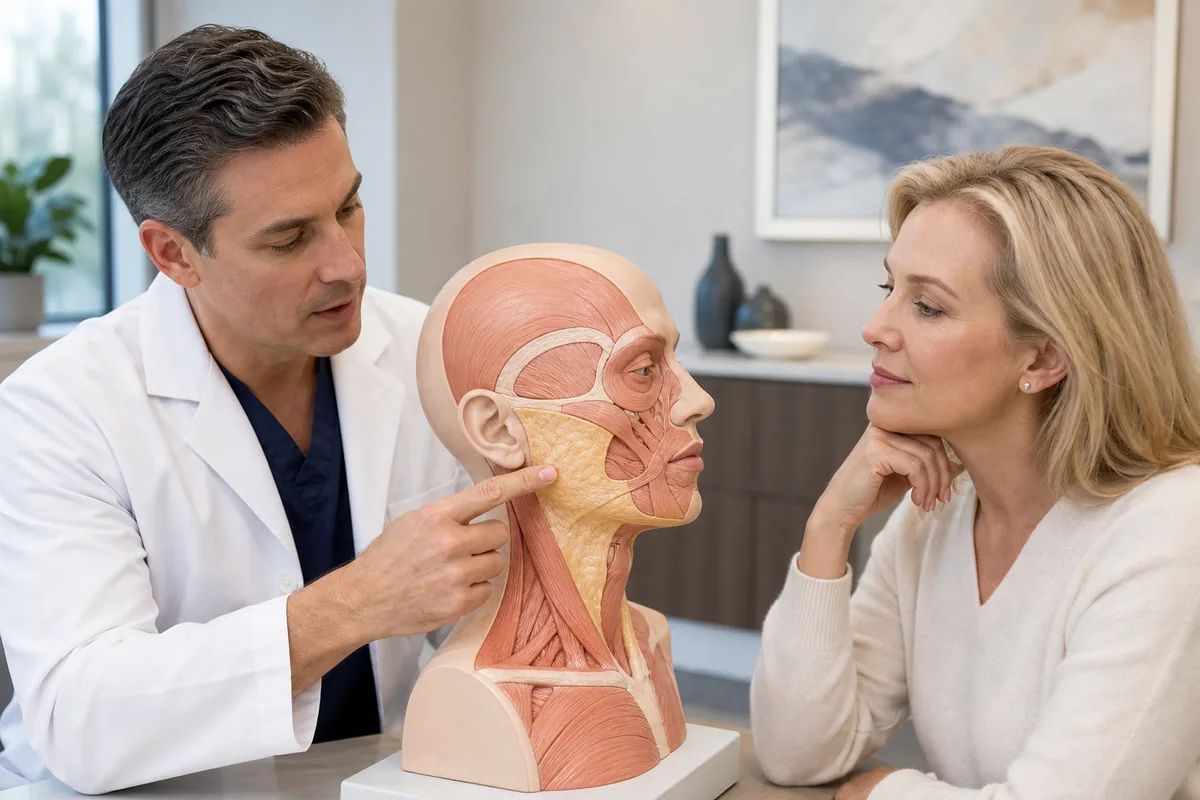
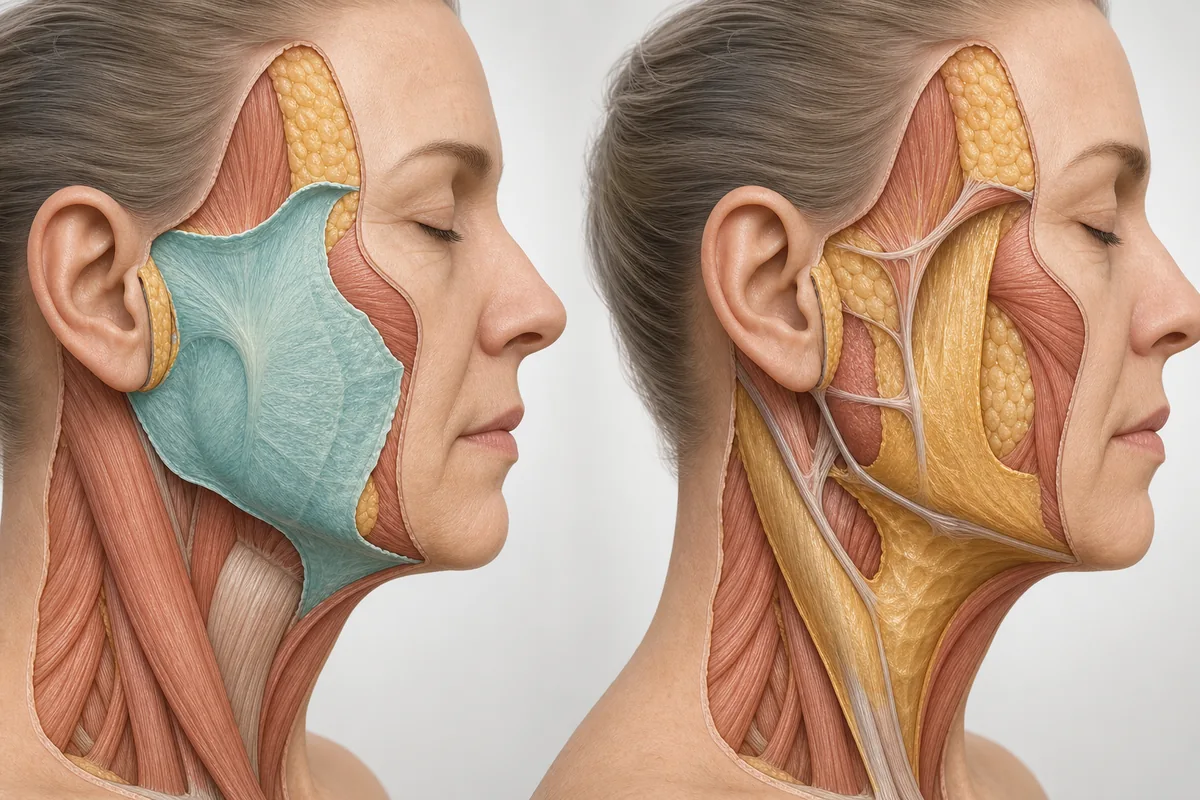
The SMAS (Superficial Musculoaponeurotic System) is the connective-tissue layer just beneath the facial skin that envelops the mimetic muscles and supports the soft tissues of the face. With ageing it loosens: the cheeks descend, jowls blur the jawline, and the neck-chin angle softens.
Modern facelift planning may address the skin, SMAS, fat compartments and neck structures according to the individual. “SMAS facelift” is not one standardized operation; plication, SMASectomy, imbrication and high-SMAS describe different scopes.
How a SMAS Facelift Works
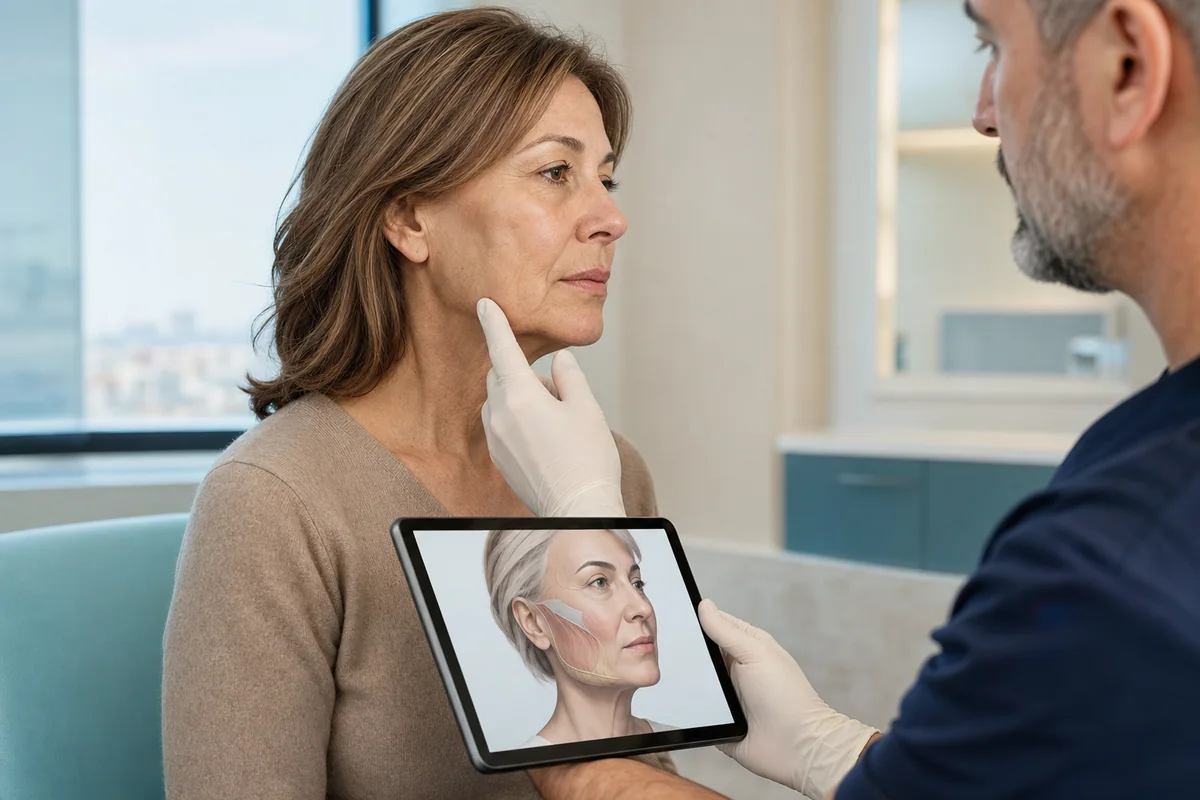
Incisions and the area of tissue work are planned individually. The SMAS may be folded (plication), partly removed or repositioned and fixed (SMASectomy/imbrication). The aim is to address laxity and, where appropriate, excess skin while distributing tension through supporting tissue. This does not guarantee a particular contour or scar appearance. Anaesthesia and any additional neck work depend on surgical scope and health assessment.
What Is a High-SMAS Facelift?
High-SMAS describes techniques extending to a higher facial level than some traditional SMAS approaches. Details vary; the label alone does not establish stronger midface elevation, faster recovery or individual suitability.
High-SMAS describes the facial approach. The platysma, fat and skin of the neck require separate assessment. Whether neck-lift steps are appropriate depends on examination findings; the technique name alone does not describe the scope of neck surgery.
SMAS vs Deep Plane — the Real Difference
The difference is whether the surgeon works on top of or underneath the SMAS:
- SMAS facelift: the layer may be folded, shortened or fixed from its surface.
- Deep plane facelift: selected areas are entered below the SMAS and retaining ligaments may be released.
Comparative reviews indicate that both approaches can help selected patients; they do not establish that one is safer, more natural or longer-lasting for everyone. The plan depends on anatomy, the distribution of laxity, the neck component, health status and expectations.
Recovery and Follow-up
Swelling, bruising, wound healing and return to activity vary between individuals. There is no universal return-to-work or final-result timetable. Surgical scope, additional procedures, health status and follow-up findings must be considered together.
Individual instructions should cover wound care, any drains or stitches, medicines, warning signs, follow-up appointments and return to daily activity. Work and travel decisions should follow that plan and examination findings rather than a fixed number of weeks.
FAQ
How long does a SMAS facelift last?
A facelift does not stop ageing. How the result looks and how long it remains visible vary with anatomy, technique, healing, sun exposure, smoking and weight change.
Which is better, SMAS or deep plane?
Neither is universally better. Comparative evidence does not establish one approach as superior for everyone; anatomy, the distribution of laxity, neck structures, health and goals need to be assessed together.
Can it be combined with a neck lift?
They can be considered together, but changes in the platysma, fat and skin, alongside health status, determine whether neck work is appropriate and its scope. SMAS or High-SMAS alone does not mean a neck lift is included.
*This content is for information only; the treatment decision is made with your surgeon after examination.*