
Doctor-led surgical planning in Istanbul
Functional Rhinoplasty & Septoplasty in Turkey
FUNCTIONAL SURGERY
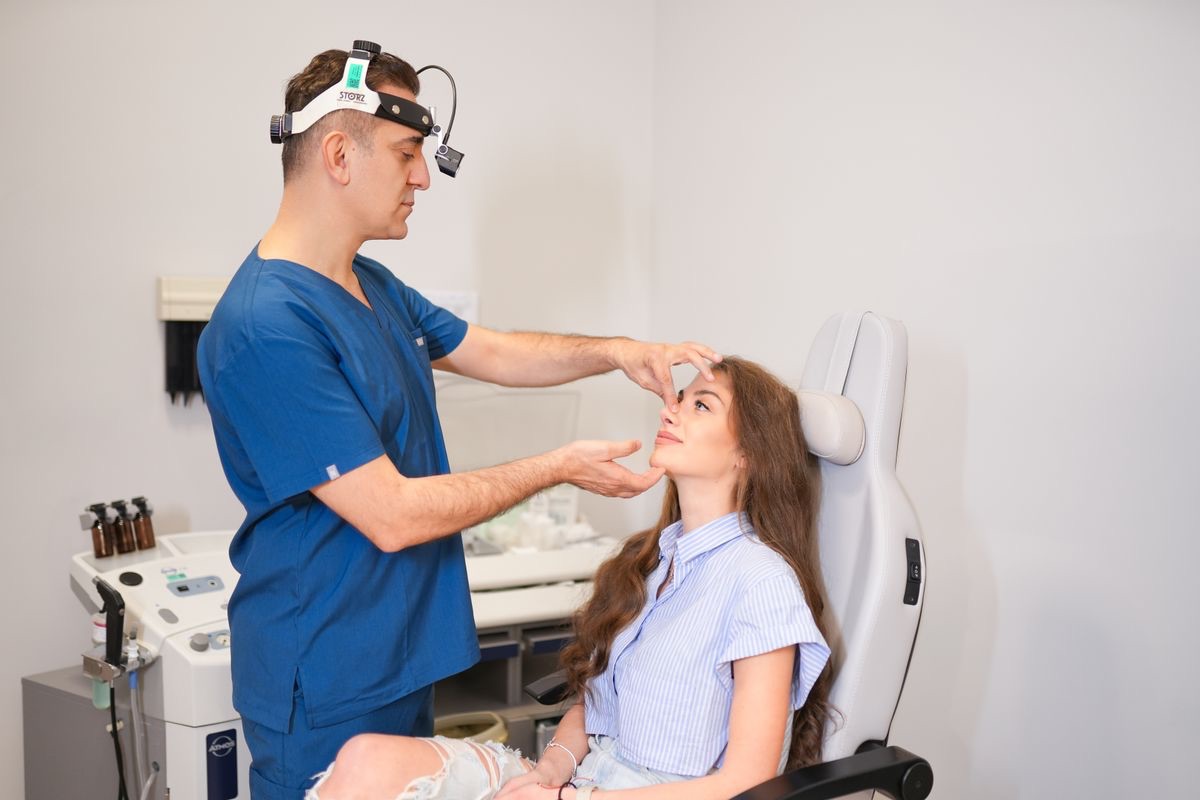
Septoplasty addresses an obstructing septum. Functional rhinoplasty may also address nasal valves or external support when examination shows a wider structural cause of obstruction.
60-second request · No obligation · Your details stay private
The short answer
Septoplasty addresses an obstructing septum. Functional rhinoplasty may also address nasal valves or external support when examination shows a wider structural cause of obstruction.
Medical suitability, technique and recovery are individual. No result can be guaranteed.ENT Surgeon
Procedure Overview
The treatment plan starts with anatomy, function and realistic expectations—not a standard package.
Septoplasty is functional surgery intended to correct a septal deviation linked to nasal obstruction. A deviation seen on examination does not prove that it is the only cause: nasal valve narrowing, enlarged turbinates, allergy and other conditions are assessed as well. When the obstruction also involves the nasal valves or external structural support, a wider functional rhinoplasty or septorhinoplasty may be considered. The scope is based on symptoms and examination, not a standard package. No operation can guarantee complete relief of breathing symptoms. Any planned external shape change is discussed and consented to separately.
What the assessment considers
Each point is reviewed against your anatomy, medical history and intended change.
60-second request · No obligation · Your details stay private
ENT Airway Assessment
The exact approach is confirmed only after the surgeon’s assessment.
Septum & Valve Review
The exact approach is confirmed only after the surgeon’s assessment.
Individual Surgical Plan
The exact approach is confirmed only after the surgeon’s assessment.
Defined Follow-up
The exact approach is confirmed only after the surgeon’s assessment.
How the clinical process is organised
A clear sequence from remote pre-assessment to examination, surgery and follow-up.
Airway Assessment
Symptoms, the septum, turbinates, nasal valves, external support and possible mucosal causes are assessed together.
Scope Decision
Findings determine whether septoplasty alone or a wider functional rhinoplasty or septorhinoplasty should be discussed.
Individual Follow-up
Splints or packing, reviews, activity and travel timing are set according to the operation and healing.
Risks & Candidacy
Possible risks
A blocked feeling and crusting can follow septoplasty. Possible risks include bleeding, infection, septal perforation, adhesions, altered smell or sensation, a change in nasal shape, persistent obstruction and revision surgery. Septoplasty alone and combined septorhinoplasty do not have the same incision or risk profile.
Who may not be a candidate
Seeing a deviated septum on examination is not enough by itself; its relationship to symptoms and other causes such as nasal valve narrowing, enlarged turbinates or allergy are assessed together. Medical and surgical options are compared after an ENT examination.
Recovery and travel planning
Timelines vary by procedure, technique and individual healing. Your travel dates should follow the surgeon’s review plan.
Blocked sensation, crusting, discharge and discomfort can occur. Whether splints or packing are needed, when they are removed, the review schedule, activity limits and travel timing are planned individually. Bleeding, infection, septal perforation, adhesions, shape change or persistent obstruction may require further treatment.
Functional rhinoplasty and septoplasty decision guide
Compare septoplasty with wider functional septorhinoplasty, including airway assessment, scope, risks and individual follow-up planning.
A clear plan before you travel
Your first contact should answer the practical questions as well as the medical ones.
Send your request
Use the enquiry form to share your main concern, previous procedures and travel questions. If photographs or records are needed, the team will explain the next step.
Doctor-led review
Your nasal structure, breathing concerns and previous procedures are reviewed together.
Receive a personal plan
You receive an initial suitability view, proposed next steps and the information needed to plan travel.
Meet in Istanbul
The final surgical plan is confirmed after an in-person examination and clinical assessment.
Continue follow-up
Early checks and longer-term follow-up are planned around your procedure and return journey.
Questions worth asking
Medical suitability, technique and recovery are individual. No result can be guaranteed.
What is the difference between septoplasty and functional rhinoplasty?
Septoplasty focuses on the internal septum. Functional rhinoplasty may also address nasal valves or external structural support when examination shows that the obstruction is wider than the septum alone.
Will surgery guarantee better breathing?
No. Surgery may improve symptoms in appropriately selected patients, but allergy, mucosal disease, valve problems, healing and other factors can affect the result.
Are splints or packing always used?
No. Internal support is selected for the operation performed. If it is used, removal, review and travel timing are planned individually.
Medical sources
Independent guidance and peer-reviewed evidence used for this page.
Start with a case-specific medical assessment.
Share your concern, prior procedures, breathing symptoms and travel window. The first response identifies what the surgeon needs to assess; it does not promise a technique or result.
60-second request · No obligation · Your details stay private